Symposium at-a-Glance
Detailed Schedule
Artificial intelligence is continuing to transform all aspects of the food value chain but if used incorrectly it can cause damage to product, brand, consumers and morale. This session will explore effective ways to interact with AI tools while learning about and preventing some of the more common and costly mistakes.
We will also cover how to choose the right AI tool for your needs and how tool selection can impact results. Attendees will gain a clearer understanding of how to use AI more effectively in their day to day product development work by focusing on best practices, practical application and real-world use.
1. Considerations for selecting an AI tool
2. How to most effectively use AI
3. Common mistakes individuals make with AI and how to avoid them

Renee has over ten years of product development experience working for Jeni’s Splendid Ice Creams, Freshway Foods, and US Foods before joining IFT. An expert in food additives and ingredients, Renee is part of the CoDeveloper teams helping companies to utilize AI in their product development workflows.

Jay Gilbert, Ph.D. leads the strategy, development, and execution of the organization’s digital product portfolio. He recently led the launch of CoDeveloper – Powered by IFT, an AI-enabled R&D platform designed to accelerate food and beverage innovation through science.
Jay holds a BS and PhD in food science from the University of Massachusetts-Amherst and Purdue University. Before joining IFT as a scientist on staff, he was an active member, serving in leadership roles at both the local and national levels. His career has focused on the intersection of science, technology, and knowledge sharing, working with volunteers and stakeholders across the food system to advance the science of food and its application.
In this session, I will discuss why food manufacturers can no longer treat reformulation as an occasional recipe adjustment or a limited regulatory response. Today, companies face pressure from regulators, retailers, consumer expectations, ingredient restrictions, and tighter proof and traceability requirements.
The session will explain why reformulation must be managed as a repeatable operating model. I will outline how companies can move from reactive, deadline-driven decisions to a more disciplined approach that translates external signals into clear portfolio implications, tests feasibility across the full value chain, and prioritizes action.
I will also cover how leading organizations can use reformulation as a strategic lever rather than treating it only as a compliance burden. The goal is to help leaders reduce disruption, avoid margin erosion, and build a more resilient organization that can respond to continuous change with greater speed, consistency, and confidence.
- Participants will understand why reformulation can no longer be managed as an occasional recipe change or a narrow compliance response.
- Participants will get framework on how companies can convert market, regulatory, customer, and ingredient signals into clear SKU exposure, timing, feasibility, and prioritization implications.
- Participants will leave with a practical view of how to reduce disruption, avoid margin erosion, and build a more resilient reformulation capability across R&D, procurement, operations, regulatory, quality, and commercial teams.

Ozan Ozaskinli is a Partner at Value Gene Consulting Group, specializing in food industry strategy, manufacturing transformation, supply chain performance, and AI-driven operations. A former BCG Partner with 20+ years of global consulting experience, he helps food companies translate major industry shifts into practical execution and resilient, future-ready operating models.
The global food system is undergoing rapid transformation driven by climate challenges, evolving regulatory expectations, technological advancement, and increasing consumer demand for transparency and trust. This presentation explores the food science trends that matter most as the industry moves from reactive problem solving to proactive, science led innovation.
Key topics include the transition of artificial intelligence from pilot projects to real world application in food safety, formulation, and supply chain optimization; the scaling of sustainability through science based solutions; and the growing convergence of nutrition, public health, and functional foods.
The session highlights how food scientists, suppliers, and industry leaders can translate complexity into clarity by integrating science, technology, and collaboration. Attendees will gain a forward looking perspective on how food science is evolving to meet regulatory, environmental, and consumer expectations while maintaining safety, quality, and trust.
- Identify key food science and technology trends shaping the food industry in 2026 and beyond.
- Understand how science based innovation can address regulatory, sustainability, and consumer trust challenges.
- Apply practical insights to support safer, more transparent, and resilient food systems.

Mohammed Ismail Adeeb is a Food Scientist and Technical Auditor with experience across food science, food safety, regulatory compliance, R&D, and sustainability. He has worked extensively in the food and beverage industry, including experience with PepsiCo, delivering sciencedriven solutions that enhance food safety, support innovation, and build consumer trust.
Heat is no longer defined solely by intensity—today’s consumers expect complex, dynamic, and globally inspired spicy experiences. This presentation explores how food scientists can design heat as a multidimensional attribute shaped by temporal dynamics, perceptual interactions, and product matrix effects.
Through applied examples, we will demonstrate how onset, linger, and modulation of heat can be controlled through ingredient selection, formulation strategies, and delivery systems. Integrating sensory science with culinary and consumer insights enables the development of more differentiated and targeted products that align with evolving market trends, including layered heat profiles and balanced, experience-driven eating occasions.
This session connects sensory science principles with practical R&D application, providing actionable strategies for moving beyond “more heat” toward intentional design of spicy experiences that resonate with today’s consumers.
- Describe heat as a multidimensional sensory experience influenced by timing and interactions
- Apply formulation and ingredient strategies to control heat delivery and perception
- Integrate sensory and consumer insights to design differentiated spicy products

Robin Boyle is a Lead Scientist in Taste Solutions & Sensory at Kalsec, specializing in chemesthetic perception, sensory-driven product design, and consumer insight integration. She collaborates globally to translate complex sensory science into actionable strategies for food innovation and contributes to industry standards through ASTM E18 and the Society of Sensory Professionals.
As companies move from evaluating to actively implementing plant-based colors, a key question remains: will they perform in my product? This presentation reframes performance as a function of design, showing how aligning color with formulation, processing, and shelf-life conditions supports more consistent, predictable outcomes in real-world applications.
Through cross-category examples, it highlights how color behaves differently across product systems and how these differences can be anticipated and designed for. The session also explores how labeling considerations and evolving expectations around transparency influence color decisions, reinforcing a more integrated, system-based approach where color supports a clear, consistent product experience.
- Understand how system design drives plant-based color performance
- Recognize how pH and ingredient interactions impact color behavior
- Consider how labeling and consumer expectations shape color decisions

Katelyn Ogle is a food scientist with more than a decade of experience in technical sales and R&D. With a Food Science degree from Michigan State University, she spent five years optimizing production in the bakery, confections, and snacks industry. Now an Account Manager at GNT, she helps customers implement innovative color solutions.
Recent advances in taste and smell neuroscience have fundamentally changed our understanding of human flavor perception. Flavor should be re-defined as including all five senses: taste, smell, sight, sound and touch. NeuroFoodScience, the application of neuroscience in food science, can be an approach to create natural taste modulators that are better for you and our planet. Actionable examples of modulators for sweet, bitter, salty, umami and kokumi tastes will be highlighted. NeuroFoodScience is the future of flavor technology.
- Learn what is NeuroFoodScience.
- How to apply it to create taste modulators.
- Learn what are the current best sweet, bitter, salty, umami and kokumi taste modulators.

Alex is the founder and CEO for W2O, a flavor technology firm for the past fifteen years based in the USA. He specializes in creating Better Food with niche expertise in contemporary taste & smell neuroscience and state of art clean label plant-based ingredients.
At-a-glance
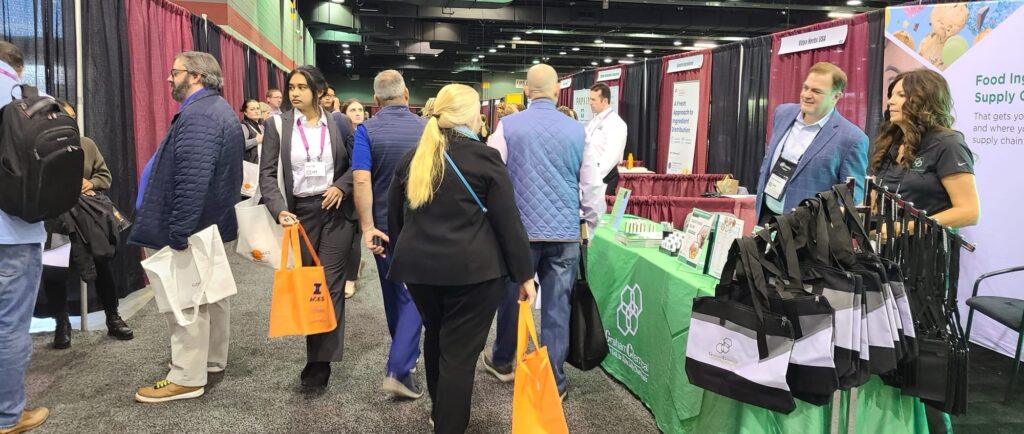
Exhibit at Suppliers’ Day
Join more than 3000 food industry professionals & 500 Exhibitors from the Chicago area at the nation’s largest regional food industry symposium and expo.